

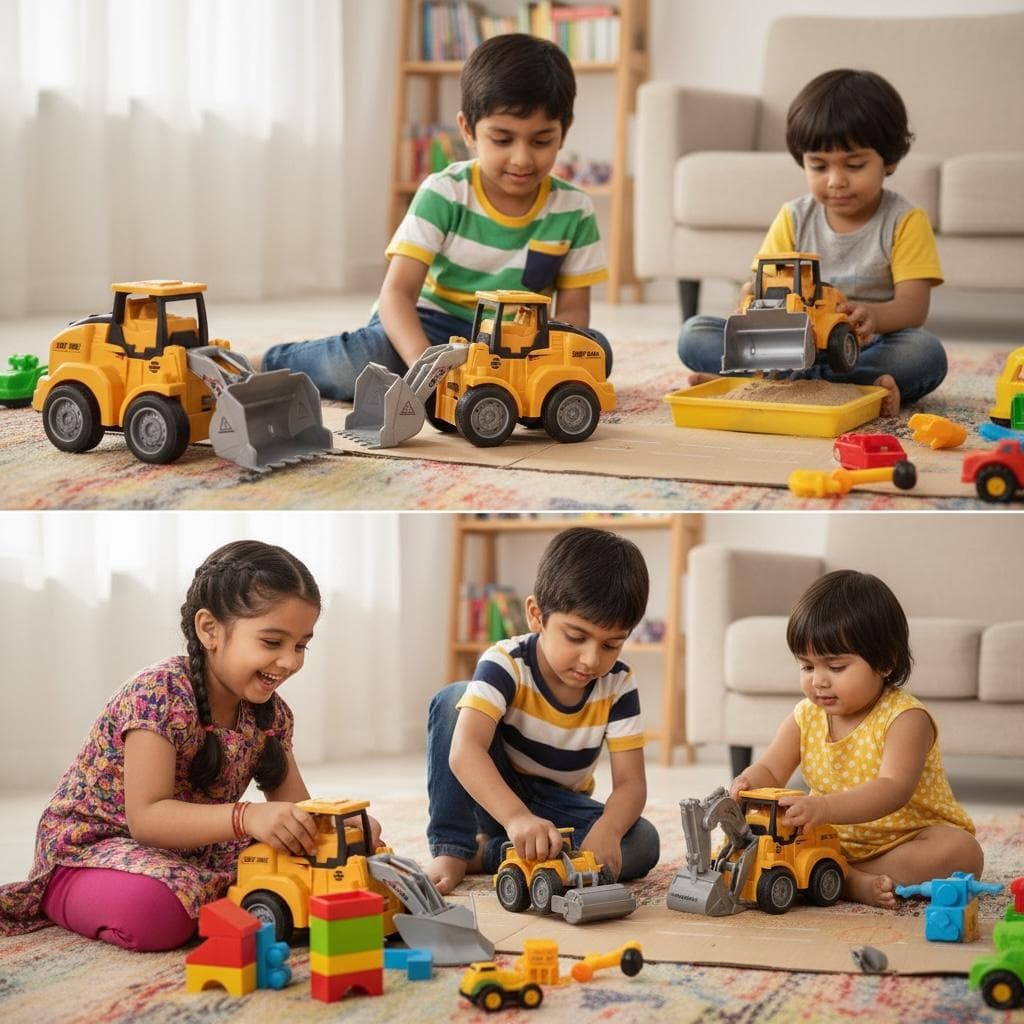
Educational & STEM Toys India: 14% CAGR Opportunity
India's educational toys segment grows at 14% CAGR. Categories that win, pricing tiers, and how distributors should weight assortment to capture it.
India's educational toys market was valued at USD 2.83 billion in 2023 and is projected to grow at a 14 percent CAGR through 2030 — meaningfully faster than the overall toy market's 9.5 percent. STEM kits, robotics, learning tablets, and skill-building construction sets are leading the lift. For distributors and retailers, the implication is clear: assortment weight that lags this segment will under-perform the category average for the rest of the decade. This piece breaks down why the segment is growing, what specifically is selling, and how to structure an assortment that captures it without losing focus.
Why educational toys are outpacing the rest of the toy market
Three demand-side shifts explain the gap.
Parents are buying play with purpose
Indian parents — particularly the urban middle class — increasingly evaluate toys on a "what does this do for my child" axis rather than a pure entertainment axis. The shift began before the pandemic and accelerated during the school-from-home years. Toys positioned around cognitive development, problem solving, motor skills, and STEM concepts are buying their way into household toy budgets that previously went to undifferentiated entertainment.
Gifting culture rewards "thoughtful" choices
Gifting accounts for a large share of Indian toy volume, and gifters compete on perceived thoughtfulness. An educational toy reads as a more considered gift than a generic plush or a battery-operated novelty. The price premium that "educational" earns at the gifting end of the market is real and measurable.
School and parenting media are amplifying the message
Indian parenting Instagram, edu-tech newsletters, and school-circulated activity guides consistently highlight STEM, sensory development, and skill-building toys. The marketing is essentially being done for retailers by the broader parenting ecosystem, which means demand is qualified by the time it reaches the shelf.
The category map — what "educational toys" actually means
Educational toys is a portfolio, not a single category. The sub-categories with distinct demand patterns:
STEM kits and robotics (highest growth, premium pricing)
Building and engineering sets, robotics starter kits, electronics-first products, and coding-themed toys. Typical retail price ₹1,500-7,000. Premium kits sell predominantly through online and metro retail; mid-priced sets (₹500-1,500) move well through tier 2-3 independents during gifting peaks.
Construction and assembly toys
Block sets, magnetic builders, gear sets. The category bridges entertainment and learning, which broadens the appeal across ages 3-10 and across price tiers. Compatibility with global brand standards (e.g., Lego-compatible) widens the audience.
Sensory development (under-3)
Texture toys, stacking, sorting, motor-skill development. The under-3 buyer is the most "educational-purpose" weighted segment in toy retail, with parents specifically seeking developmental claims. Packaging that articulates the developmental benefit clearly drives the purchase.
Pre-school learning (3-6)
Letter and number play, alphabet trains, phonics toys, early-math toys. Strong school-reopening demand and bundled-with-back-to-school gifting lift this segment in May-July annually.
Strategy and logic (6+)
Puzzles, logic games, board games with skill development. Family-purchase index is high in this segment, which makes it a Diwali sweet spot — board games specifically over-index in the family-gifting window.
Arts, crafts, and creative play
Often overlooked because it sits at the boundary of toys and stationery, but Indian parents increasingly classify it as educational. Steady demand year-round with school-reopening and Christmas-school-holiday peaks.
Merchandising — by developmental need, not by product format
Most retailers merchandise educational toys by physical format (puzzles together, board games together, building sets together). The merchandising that converts better is by developmental need:
- Cognitive and problem solving — puzzles, logic games, strategy toys, certain construction sets
- Fine motor skills — building sets, threading, magnetic toys, precision-based crafts
- Language and reading — phonics toys, letter games, story-based games
- STEM and discovery — robotics, electronics, science kits, math toys
- Creative expression — arts, crafts, pretend play, role-play sets
Why this merchandising wins: gifting buyers and parents typically come in with a *need* (often heard from a school or a parenting peer), not a product format. "I want something that helps with focus" or "she struggles with reading" leads to a faster confident sale than browsing a shelf of "puzzles". The retailer that organises around the need closes faster.
Pricing tiers — segment, do not blend
Educational toys span a wider price range than most other categories — from ₹199 phonics flashcards to ₹7,000 robotics kits. Distributors should structure assortment in clear tiers:
Entry (₹199-499)
Volume drivers. School-reopening, gifting bottom tier, impulse purchase. Packaging-led, often pitched at "educational with a twist" rather than serious developmental tools.
Mid (₹500-1,500)
The gifting sweet spot. Strong Diwali, Christmas, and birthday demand. Most parents will spend in this tier without justification.
Premium (₹1,500-3,500)
Aspirational and grandparent gifting. Branded STEM kits, premium puzzles, multi-piece construction sets. Sells better with a feature explanation video on retailer WhatsApp.
Top tier (₹3,500-7,000+)
Robotics kits, electronics labs, coding-first toys. Concentrated in metro retail and online. Margin pool is healthy but turn rates are slower; carry conservatively.
Mixing tiers on the shelf without visual segmentation confuses buyers. Each tier deserves its own placement logic and its own merchandising message.
Distributor strategy — what to over-weight, what to skip
For distributors building an Indian toy assortment in 2026, the educational segment justifies a larger share than most current portfolios reflect. A reasonable target:
- 30-35 percent of total SKU count weighted to educational sub-categories, up from typical 15-20 percent in legacy distributor portfolios
- Strong representation across all five developmental-need merchandising buckets — gaps in any bucket cost cross-sell
- Stronger weight in mid-tier (₹500-1,500) than in top-tier — turn rates favour mid-tier, and it captures the largest gifting wallet
- Skip "educational" SKUs that are entertainment relabelled — Indian parents and retailers are increasingly able to distinguish, and a category-credibility loss compounds across the portfolio
- Lean into Made-in-India educational brands — domestic manufacturers serving this segment have caught up materially in 2024-2025 and now compete credibly with imported equivalents on quality, with significant cost and lead-time advantages
Manufacturer questions specific to educational toys
When evaluating a manufacturer for educational SKUs, beyond the standard BIS and operational checks (see our BIS certification guide and domestic sourcing guide), there are category-specific questions worth asking:
- Educational claim substantiation — can the manufacturer point to research, expert collaboration, or curriculum alignment that backs the developmental claim, or is the claim purely marketing copy?
- Age-grade rigour — are age suitability statements internally tested, or just copied from a similar product? An over-aggressive age claim creates returns and complaints.
- Iteration cadence — educational toy demand evolves with curriculum and parent media trends. A manufacturer that refreshes the catalogue annually is a healthier long-term partner than one with a static lineup.
- Multilingual readiness — for India distribution, Hindi or regional language artwork variants for instructional content widen the addressable market materially in tier 2-3 cities.
FAQ
What is the size of India's educational toy market in 2026?
Roughly USD 3.5-4 billion based on 2023 data of USD 2.83 billion compounding at 14 percent CAGR through 2030. The educational segment is growing meaningfully faster than the overall Indian toy market's 9.5 percent CAGR.
Which educational toy categories are growing fastest in India?
STEM kits and robotics lead growth, followed by construction and assembly toys, sensory development for under-3s, and strategy/logic for older children. Arts and crafts, while overlooked, holds steady year-round demand and over-indexes during school holidays.
How should I price-tier educational toys in my retail or distribution assortment?
Four tiers — entry (₹199-499), mid (₹500-1,500), premium (₹1,500-3,500), and top (₹3,500-7,000+). Mid-tier captures the largest gifting wallet and should anchor the assortment. Top-tier carries margin but slower turns; weight conservatively.
Are Indian-made educational toys competitive with imports?
For the categories Indian manufacturers serve (sensory, construction, learning aids, mid-tier STEM), yes — and the cost-and-lead-time advantage is significant in 2026. For premium robotics with complex electronics or licensed branded STEM kits, imports retain an edge.
What is the best time of year to push educational toys in retail?
Three peak windows: school-reopening (May-July), gifting season (October-December), and post-festive new-year resolution buying (January). School-reopening is the most distinctive — it favours educational over entertainment toys more decisively than any other window in the year.
Educational toys in the Funtastique catalogue
Funtastique manufactures across the educational spectrum — sensory development, learning, construction, STEM-themed action play — through brands designed for Indian retail conditions and price tiers. We supply distributors building educational-weighted assortments with BIS-certified product, multilingual artwork options, and a quarterly refresh cadence on top SKUs. To explore the catalogue and distributor terms, see our products page or apply to the partner program.
Reach out for catalogue requests, distributor conversations, or manufacturing questions.