

Made in India Toys: 2026 Sourcing Advantage Explained
Why domestic toy sourcing now beats imports on cost, lead time, MOQ, and compliance — and how distributors should evaluate Indian manufacturers.
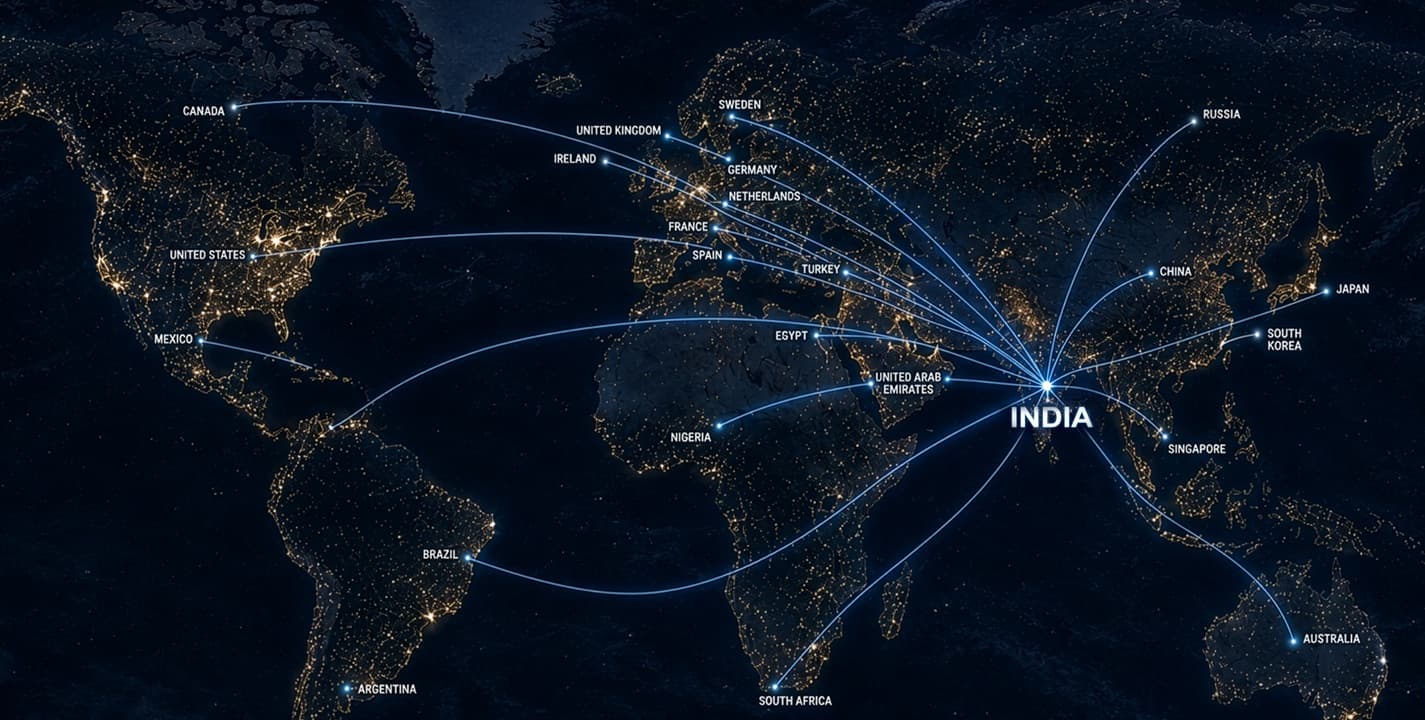
Five years ago, sourcing toys from China was the default for almost every Indian distributor and retailer. In 2026, that calculus has flipped. India's domestic toy manufacturing base now exports to 153 countries, the government has allocated INR 3,489 crore in cluster support, the Toys (Quality Control) Order 2020 has lifted the floor on quality across the industry, and import duties plus tightening BIS enforcement have closed the cost gap that used to favour imports. This piece explains why sourcing from Indian manufacturers is now the strategically smarter choice for most categories — and how to evaluate domestic suppliers properly.
The structural shift behind Made in India toys
Three forces have repositioned Indian manufacturing in the global toy supply chain.
Government policy that actually moved capital
The Production Linked Incentive (PLI) framework, the Toy Cluster Development Scheme, and the import duty hike on toys (from 20 to 70 percent on most categories in 2020-2023) collectively shifted the economics. Indian manufacturers that previously could not compete on cost suddenly had a fifteen to thirty percent margin advantage on the domestic market and the capital to upgrade equipment for export.
Quality enforcement under the QCO
The Toys (Quality Control) Order 2020 forced underperforming manufacturers out of the market and rewarded those who invested in BIS-licensed quality systems. The remaining base is smaller but materially more disciplined than the pre-2020 industry. For distributors, this means the average Indian manufacturer in 2026 is closer in quality posture to a tier-2 Chinese supplier than to the loose, fragmented domestic base of a decade ago.
Export pull-through
Indian toy exports have grown roughly 240 percent over five years. The United States is the dominant buyer at $78.5 million in the most recent year, with the United Kingdom, Mexico, Poland, and Germany as significant secondary markets. Export discipline is contagious — a manufacturer running EN 71 and ASTM F963 production for European and US buyers brings that discipline to their Indian SKUs as a side effect.
What domestic sourcing actually buys you
Beyond the headline numbers, the operational advantages of working with Indian manufacturers compound across a distribution year.
Shorter feedback loops
A retail-detected defect can be diagnosed, sampled, and resolved with a Pune or Noida factory in two to four weeks. The same loop with a Shenzhen supplier typically runs eight to twelve weeks because of shipping, customs, sample courier costs, and time-zone friction. For categories that iterate quickly — battery-operated, electronic, novelty — this matters more than it sounds.
Replenishment without long-haul lead time
Domestic lead times are typically three to six weeks from PO to dispatch for SKUs already in production. A China import equivalent runs eight to fourteen weeks including ocean freight and customs clearance. The shorter cycle reduces working capital pressure during festive demand surges and lets distributors react to actual sell-through data rather than forecast eight weeks ahead.
MOQ flexibility
Indian manufacturers serving the domestic market generally tolerate smaller MOQs (often 100-500 pieces per SKU at the start of a relationship) than equivalent Chinese suppliers (typically 1,000-3,000). This lowers the cost of testing new SKUs and reduces dead inventory risk for distributors building out an assortment.
Compliance documentation in your hands
A BIS-licensed Indian manufacturer can hand over the licence numbers, test reports, and sample artwork as part of standard onboarding. Imported toy compliance often requires the importer to maintain a separate BIS testing pathway, which adds cost and time. Sourcing domestic transfers this responsibility to the manufacturer, where it belongs.
Lower landed cost in many categories
After import duty, freight, customs handling, and BIS surveillance costs, the all-in landed cost of a comparable Chinese toy in 2026 is typically 5-25 percent higher than its Indian equivalent for mid-priced categories (₹200-1,500 retail). Premium categories (₹2,000+) and licensed lines are exceptions where global brand equity still justifies the import premium.
What domestic sourcing does not solve
Made in India is not a panacea. There are real categories and use cases where China still wins:
- Highly licensed brands (Disney, Marvel, Pokémon, etc.) where the global rights-holder ships from a global supply chain
- Cutting-edge electronics at the price-point Chinese supply chains hit through their component ecosystem
- Some plush categories where Chinese fabric and stuffing supply chains remain more cost-efficient at scale
- Custom one-off promotional toys at very small volumes (under 500 pieces) where Indian manufacturers may not yet match the rapid-prototyping speed of Yiwu suppliers
A pragmatic distributor builds a portfolio: 70-85 percent domestic for core revenue, 15-30 percent imported for specific category gaps. Going 100 percent in either direction usually leaves margin or assortment depth on the table.
How to evaluate an Indian toy manufacturer
The Indian manufacturing base is improving fast, but variance between manufacturers is still wide. Use a structured evaluation:
Quality system
- Current BIS licence with the licence number visible and verifiable on the BIS website
- Test reports from a recognised laboratory dated within the last twelve months
- A documented batch release procedure — not "we check before dispatch" but a written SOP with sign-off responsibilities
- A multi-year complaint and recall log
- Calibrated test equipment with calibration certificates
Production capacity and reliability
- Production capacity per category, with peak-month and off-peak figures so you can model festive demand
- Lead time for SKUs already in production, and for new SKUs requiring tooling
- Tooling ownership — does the manufacturer own its moulds, and what is the moulds-per-line ratio?
- A reference-able list of distributors and exporters they currently supply
Commercial transparency
- An MOQ ladder that scales down as the relationship matures
- Pricing structure with line-item visibility (raw material, conversion, packaging, BIS surveillance)
- A clear position on territory exclusivity
- Payment terms that match industry practice (typically 30-60 day credit after a clean payment history is established)
Brand and category fit
- Categories that align with your distribution territory's demand pattern
- Price points that map to your retailer mix
- Packaging quality matched to your retailer expectations
- Willingness to make small custom adjustments (artwork variants, pack sizes) without redesign fees
Where the Indian toy industry is going next
A few trends are worth tracking through 2027:
- Cluster maturation — Noida, Bengaluru, Pune, and Channapatna are emerging as specialised toy clusters, each with category strengths. Distributors with proximity to one of these clusters will compound logistics advantages over time.
- Export-domestic feedback loop — manufacturers servicing both export and domestic channels will continue raising the quality floor as export buyers push EN 71 and ASTM standards backward into IS 9873 production.
- Sustainability premium — wood, biodegradable plastic, and recycled-paper packaging are growing 12-18 percent annually in the Indian retail mix. Manufacturers investing in sustainable substrates will capture the premium tier of the market first.
- Educational and STEM categories — the educational toys sub-segment is growing at 14 percent CAGR through 2030, faster than the overall market's 9.5 percent. Distributors weighting their assortment toward this segment will outperform the category average.
FAQ
Are Indian-made toys really comparable in quality to Chinese imports in 2026?
For the categories Indian manufacturers actively serve, yes — and in many cases better, because the QCO 2020 enforcement has driven out the lowest tier of producers. The remaining domestic base, especially BIS-licensed exporters, runs quality systems comparable to mid-tier Chinese suppliers. The variance between Indian manufacturers is wide; the variance between a *certified, exporting* Indian manufacturer and a comparable Chinese counterpart is small.
Is Made in India a marketing claim or a real procurement signal?
Both. As a marketing claim, "Made in India" resonates strongly with Indian retailers and end-consumers in 2026 — schools, gifting buyers, and tier 2-3 retailers actively prefer it. As a procurement signal, it correlates with shorter lead times, smaller MOQs, and easier compliance, which translate directly into working capital savings.
What is the cost difference between sourcing from India vs China today?
For mid-priced categories (₹200-1,500 retail), Indian sourcing typically lands 5-25 percent cheaper after duty, freight, and compliance overhead. For premium licensed categories, China can still be cheaper landed because of scale and rights logistics. For unbranded plush above 30cm, China remains competitive on raw material cost.
Which Indian states have the strongest toy manufacturing clusters?
Maharashtra (Pune and Mumbai region), Uttar Pradesh (Noida and Greater Noida), Karnataka (Bengaluru and Channapatna), Tamil Nadu, and Delhi NCR are the largest toy manufacturing hubs by output. Each has category specialisations — Channapatna is famous for traditional wooden toys, Noida for plastics scale, Pune for engineering-led design and electronic toys, Bengaluru for educational and STEM toys.
How do I find reliable Indian toy manufacturers as a new distributor?
Start with the BIS licence database (publicly searchable), the All India Toy Manufacturers Association (AITMA), and trade events like the India Toy Fair. Cross-reference with export data — manufacturers showing up in DGCI&S or shipping data for the US, UK, or EU markets have already passed the export quality bar, which is a strong proxy for domestic reliability.
Sourcing from Funtastique
Funtastique manufactures eight in-house brands — across sensory, RC, outdoor, electronic, learning, construction, action, and focus toys — from a BIS-certified facility in Pune. We supply distributors across India and export-ready buyers in the GCC, Europe, and Southeast Asia. If you are evaluating domestic sourcing for 2026, see our manufacturing capabilities or request a distributor pack — we will share BIS licence numbers, MOQ ladder, lead-time data, and a sample shipment plan upfront.
Reach out for catalogue requests, distributor conversations, or manufacturing questions.